HMDD Collaborations: What They Mean for the Brand’s Identity
HMDD, short for Happy Memories Don’t Die, has built its name on a philosophy rather than a logo. The brand treats clothing as a vessel for nostalgia, and every collaboration it enters becomes a test of whether that idea can survive contact with another creative voice. When two brands merge visions, one of them usually bends. With HMDD, the bending tends to happen carefully, because the phrase «happy memories don’t die» is not just a tagline — it is the entire reason customers return. Collaborations force the label to answer a harder question than «what does this look like?» It has to answer «does this still feel like us?» That tension is exactly why HMDD’s partnerships matter more than a typical streetwear crossover.
The majority of fashion collabs function mainly to borrow attention. A smaller-scale name teams up with a bigger name, sees a spike in traffic, and walks away. In practice, HMDD’s approach shows up as different. Rather than chasing the most attention-grabbing option, HMDD tends to pick collaborators who resonate with an emotional register that’s melancholic, memory-driven, and subtly defiant. Because of that selectiveness, the brand identity stays coherent across drops — and it’s worth breaking down piece by piece.
Joint Projects as a Stress Test for Identity: Why That’s the Case
A brand’s identity is easiest to protect when it operates alone. Each textile pick, every graphic positioning, every fit decision remains within one team’s control. Compromises start piling up the moment a second creative partner joins the picture. HMDD clothing has built recognition around specific signals: distressed graphics, oversized silhouettes, and text treatments that reference memory, loss, and time. Those signals could readily be watered down into something blander by a collaborator with a sharper, more commercial https://hmddclothing.org/ aesthetic.
Right here is where discipline emerges as a strategic asset. Commentary and testimonials out of the HMDDLA community consistently highlight that joint-project items continue to hold the brand’s signature aesthetic fingerprint — identical fabric heft, the same worn-in printing technique, the same evocative naming on tags and packaging inserts. This uniformity is no accident. This implies an underlying principle: partners are free to adjust color or silhouette, but the emotional throughline is left intact.
Consider the alternative. If HMDD released a collab hoodie with bright, glossy branding and zero reference to its usual themes, longtime buyers would notice within seconds. The brand’s audience isn’t drawn in by trend-chasing; they’re drawn in by specificity. A single misstep — one collection that feels like merchandise rather than memory — could cost more trust than any short-term sales bump would repay.
Uncovering Via Partnerships What HMDD’s Creative Approach Truly Represents
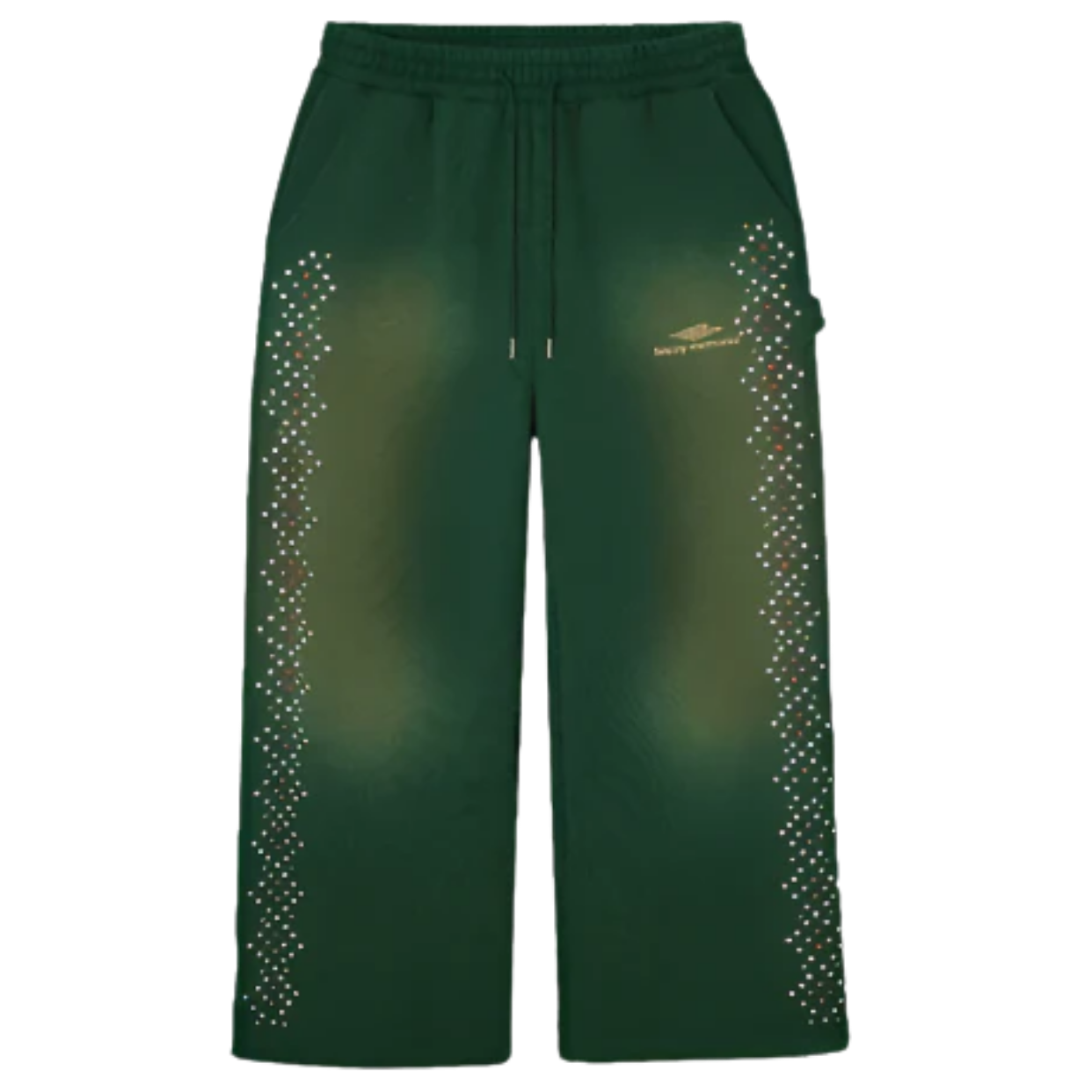
Any joint release serves as a spotlight on creative patterns that might under other circumstances go unremarked. Whenever HMDD teams up with an external collaborator, certain elements show up across nearly all output: dense cotton fabrics (usually in the 280–400 GSM range for hoodies and sweatshirts), loose-fitting boxy cuts, and hand-distressed or re-dyed finishes that lend each piece a lived-in quality instead of a off-the-rack one. HMDD’s sweatpants line makes the pattern most obvious — a loose taper, elasticated rib endings, and a material feel that prioritizes comfort over sharp tailoring.
HMDD applies this same thinking to its shorts. Instead of relegating shorts to an afterthought, HMDD carries over the matching distressing techniques and typography choices found on outerwear pieces, helping a entire seasonal release feeling cohesive instead of disjointed. That consistency across categories — hoodies, sweatpants, shorts, tees — is part of what makes people search specifically for «best hmdd clothing» rather than settling for a run-of-the-mill streetwear substitute.
- Textile heft stays thick and solid, even in hot-season pieces like shorts.
- Lettering relies on script-style or weathered-stencil styles instead of minimal sans-serif branding.
- Color palettes gravitate to muted blacks, muted greys, and dulled earthy hues over saturated brights.
- Graphics reference memory, time, and impermanence rather than pure logo placement.
As soon as a collaborator joins this ecosystem, they’re effectively required to fall in line with HMDD’s aesthetic rather than asserting their own identity. That’s a harder ask than it sounds, and this is exactly why not every proposed partnership makes it to production.
The Commercial Rationale for Picking Collaborators Sparingly
The economics of streetwear prize rarity and penalize excess visibility. A brand that teams up indiscriminately eventually collaborates with no one memorably. HMDD’s release cadence appears to favor limited quantities and occasional joint releases rather than continuous co-branded output. This rhythm serves a double purpose: it preserves the feeling of exclusivity, and it grants designers sufficient room to guarantee each collaboration still reads as unmistakably HMDD.
There’s also a pricing logic worth noting. Collaboration pieces in streetwear typically carry a premium over standard catalog items — commonly priced 15–30% higher — due to greater manufacturing complexity, smaller runs, or co-branding expenses. Customers researching an «hmdd review» before buying often flag price-to-quality ratio as a deciding factor, so any partnership that increases cost without a matching bump in perceived quality risks backlash rather than praise.
Because of this the smartest fashion collaborations function less like marketing stunts and more like joint R&D projects. Both teams combine their methods — perhaps one brings a dyeing technique while the other supplies a shape — and what emerges should read as deliberate rather than thrown together. If that equilibrium succeeds, each fanbase ends up embracing the other label. Should it fall short, both fanbases feel like an afterthought.
Comparing Collaboration Approaches
To get a sense of where HMDD stands against common streetwear collaboration approaches, it helps to compare a few standard methods used across the industry in 2026. The table below breaks down three overarching collaboration styles seen in the broader streetwear scene, unconnected to specific named partners.
| Collaboration Style | Primary Goal | Typical Release Size | Danger to Brand Voice |
|---|---|---|---|
| High-frequency co-branding | Maximize visibility and attention | Sizable, ongoing batches | Elevated — identity dilutes with too much visibility |
| Single hype drop | Short-term sales surge | Extremely scarce, one-time run | Moderate — impact dissipates once hype passes |
| Discerning, principle-driven partnership (HMDD’s typical pattern) | Reinforce core identity while engaging adjacent audiences | Sparing, occasional | Slight — partner conforms to brand language rather than replacing it |
That third row is where HMDD’s collaborations tend to land. HMDD doesn’t seem eager to pack its release schedule with co-branded merchandise. Rather, each partnership seems designed to answer a specific creative question — a new fabric process, an unexplored color story, a different take on distressing — while leaving the emotional heart of «happy memories don’t die» completely preserved.
What Shoppers Should Take Away in 2026
For anyone comparing HMDD against other emerging streetwear labels this year, collaborations offer a useful litmus test. Should a collaborative piece still come across as clearly HMDD — same fabric weight, same worn typography, same emotional resonance — that’s a strong signal the brand’s identity is solid enough to survive growth. If future drops start feeling interchangeable with whichever partner is attached, that counts as a warning sign worth watching.
Anyone looking into HMDD sweatpants, HMDD shorts, or a collaboration release should take note of a few useful details before buying: fabric weight specified in the product description, whether sizing runs true-to-size or oversized by design, and whether the piece is part of a serialized or limited run. These details carry more weight in collaboration releases than in standard catalog drops, since collaboration pricing usually sits higher and expectations increase accordingly.
In the end, HMDD’s collaborations act as identity checkpoints rather than purely marketing events. Each collaboration questions whether the brand can widen its reach while still holding onto the particular, memory-fueled atmosphere that first built its fanbase. So far, the pattern suggests a brand more interested in protecting its voice than chasing every available spotlight — and for a label built wholly around emotional resonance, that discipline may be its most valuable asset heading further into 2026.
Udenlandske casinoer for danske spillere: Fællesskaber online Udenlandske casinoer har vundet stor popularitet blandt danske spillere, ikke kun på grund af de mange spil og bonusser, men også for de online fællesskaber, de tilbyder. Disse fællesskaber gør det muligt for spillere at dele erfaringer, strategier og tips med hinanden. I denne artikel vil vi udforske, […]
«Site Not Found İddaa Siteleri Content En İyi 12 Canlı Bahis Sitesi Bahis Sitesinde Canlı Destek» «olmak Sultanbet – En Fazla Bahis Seçeneği Olan Canlı Bahis Siteleri Yeni Bahis Sitelerini Keşfetmenin Yolları Neler? Cashalot – Bonus İmkanlari Fazla Olan Canlı Bahis Sitesi En İyi Bahis Siteleri Bahis Oranlarının Anlamı: Tl Bonus Veren Bahis Siteleri Canlı […]
Μπόνους 100% Έως 500 + 200 Fs Content Βοήθεια Όποτε Τη Χρειάζεστε Διαρκείς Προσφορές Για Όλους Sg Καζίνο Ελλάδα Live Καζίνο – Η Αληθινή Εμπειρία Από Το Σπίτι Προσφορές Και Μπόνους Αποδεκτές Μέθοδοι Πληρωμής Καταθέσεις Και Αναλήψεις Στο Sg Καζίνο Μπόνους Και Προσφορές Του Sg Καζίνο Όρια Και Χρεώσεις Παραδοσιακές Και Ζωντανές Επιτραπέζιες Επιλογές Υποστηρίζοντας […]